
Heating and cooling your home with passive solar design
The sun is a free and endless source of energy. Passive solar design uses it to keep a house warm in winter and cool in summer.
Well-placed windows and thermal mass are the two main tools, and they can save a great deal of energy.
In summer, keep the sun out of the windows that face the equator: south-facing windows in the northern hemisphere, north-facing ones in the southern hemisphere. Shutters, blinds, curtains or awnings all work. Deciduous trees also give useful shade in summer. In hot climates, a white roof reflects much of the sun's energy and helps keep the house cool.
In a warm climate, plenty of windows on the east side and as few as possible on the west side will keep out the strong afternoon sun.
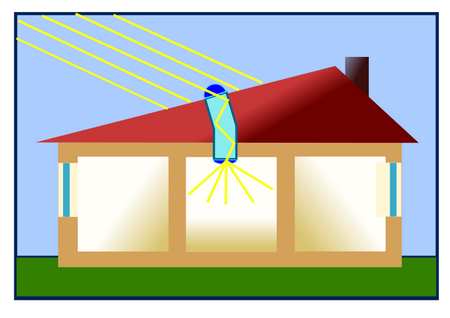
To gain heat in winter, increase the window area on the side facing the equator. If you have room, a sunroom built on that side is the most effective solution. When building a new house, orient it so that this side faces true south (or true north in the southern hemisphere) as closely as possible. Fans in the sunroom can push the warm air to the rest of the house. At night, when the sunroom cools down, switch the fans off and close its doors. Sloped roof glazing and skylights are best avoided.
The second key element is thermal mass. These materials soak up the sun's heat, store it and release it slowly. As a result, the house keeps getting warmth from the sun long after sunset.
Good thermal mass materials are concrete, brick, stone, tile and heavy wood, ideally in a dark color. Use them for floors and walls that receive direct sunlight. Concrete is not ideal for the environment, but a mix with a high share of fly ash, made with a dry kiln process, is a greener option.
People have used passive solar design for centuries. It is still an excellent idea today, and over time it can save a lot of energy and money.